Journey to Banat
Juli 2014
In June 2014, I had the unique opportunity to travel with a group of twelve people from Canada and the USA to the former home of my father, Dr. Josef Wüst. All of the travelers were descendants of Danube Swabians who had formerly lived in the area around Zichydorf and emigrated overseas around 1900. The trip was organized by Glenn Schwartz from Saskatchewan, Canada, president of the Zichydorf Association. Also joining us this time was Ray Borschowa from Oregon, who organized the translation of Dr. Josef Wüst's book “Verlorene Heimat Georgshausen” (Lost Homeland Georgshausen).
On the afternoon of June 9, my tour group, which had left Frankfurt a few days earlier, picked me up from my home in a small coach. We spent the first night in Hungary. The next day, we visited several villages in the Hungarian part of the Banat region and crossed the border into Serbia at Kolut. It should be noted that all tour participants were able to express their wishes before departure regarding which places were important for them to visit. Our route was planned accordingly.
So, once we had crossed the border into Serbia, our tour guide Staša joined us and fulfilled us every wish. For me, he turned out to be a real gem and I can only recommend him. I am happy to pass on his contact details if required.
Our first stop was Gakowa, where we paused for a few minutes at the memorial to the former inhabitants of Banat who lost their lives in the camps. Well prepared as I was, I naturally lit a candle there.
We continued through various former German villages such as St. Hubert, Heufeld, Kathreinfeld, Groß Betschkerek, and Etschka, where we also spent the night. Groß Betschkerek and Etschka were also on my list of important places I wanted to visit.
The next day, our first stop was Rudolfsgnad, once a beautiful, thriving village, but remembered by all as an extermination camp and the final stop for so many Danube Swabians. We visited the memorial, and I lit a candle for all the victims. Many of the former inhabitants of my father's home village are also buried there.
The journey took us on via Sigmundsfeld to Lasarfeld. There, Staša searched for the ruins of my relatives' former mill—and he found it! My uncle Peter Fochler always talked about his father's mill. Now I was standing here and so many stories were running through my head.
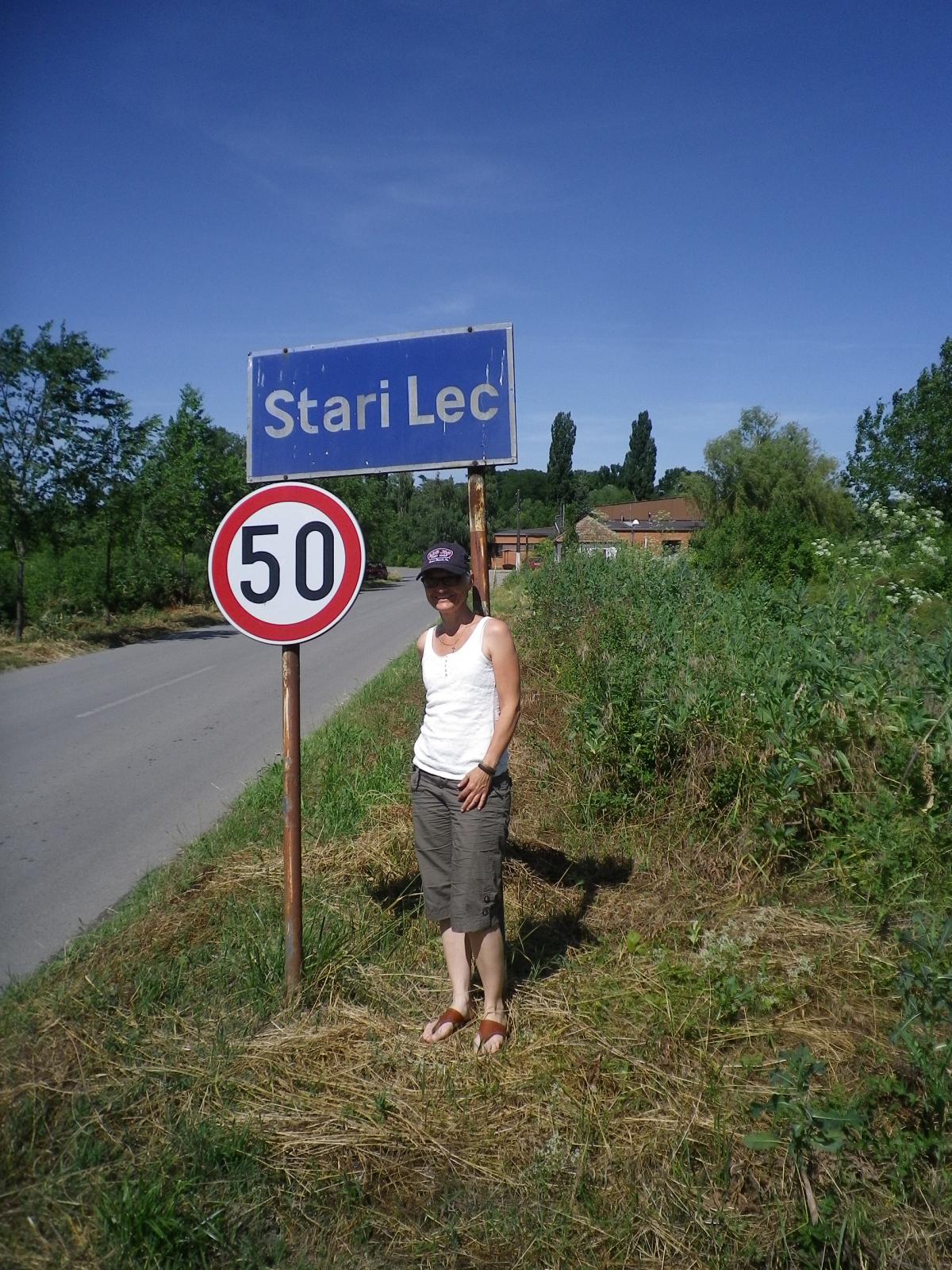
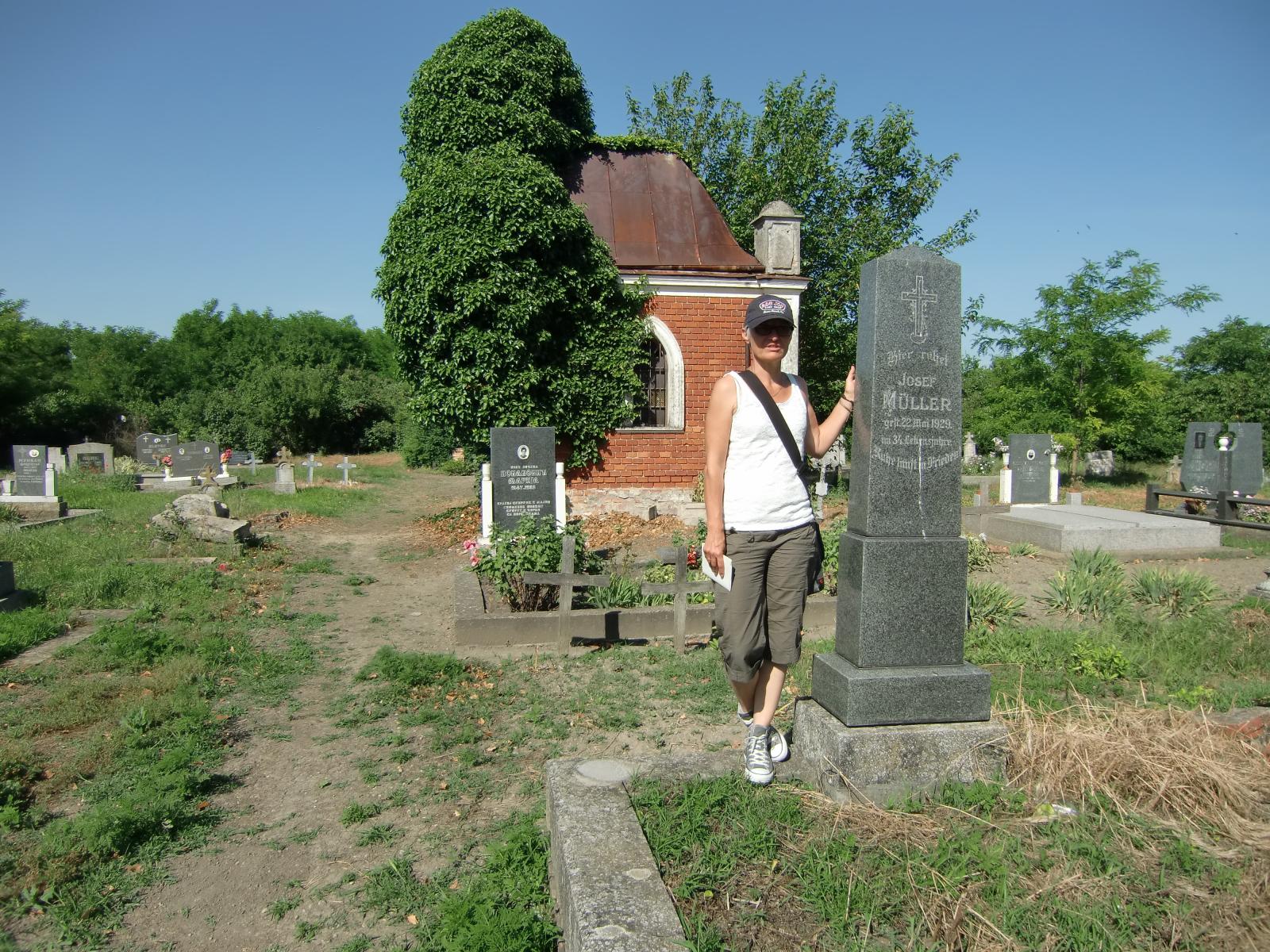
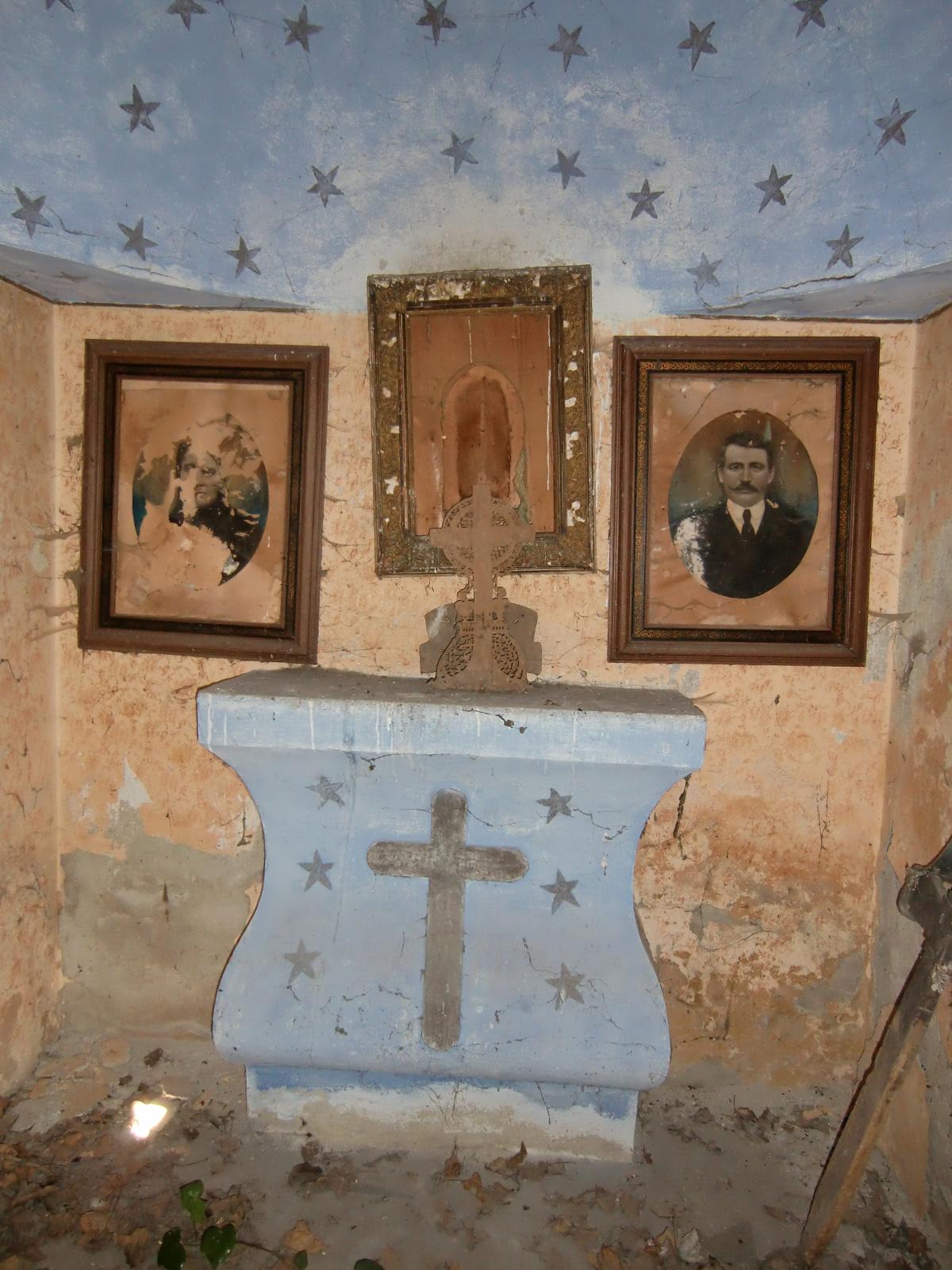
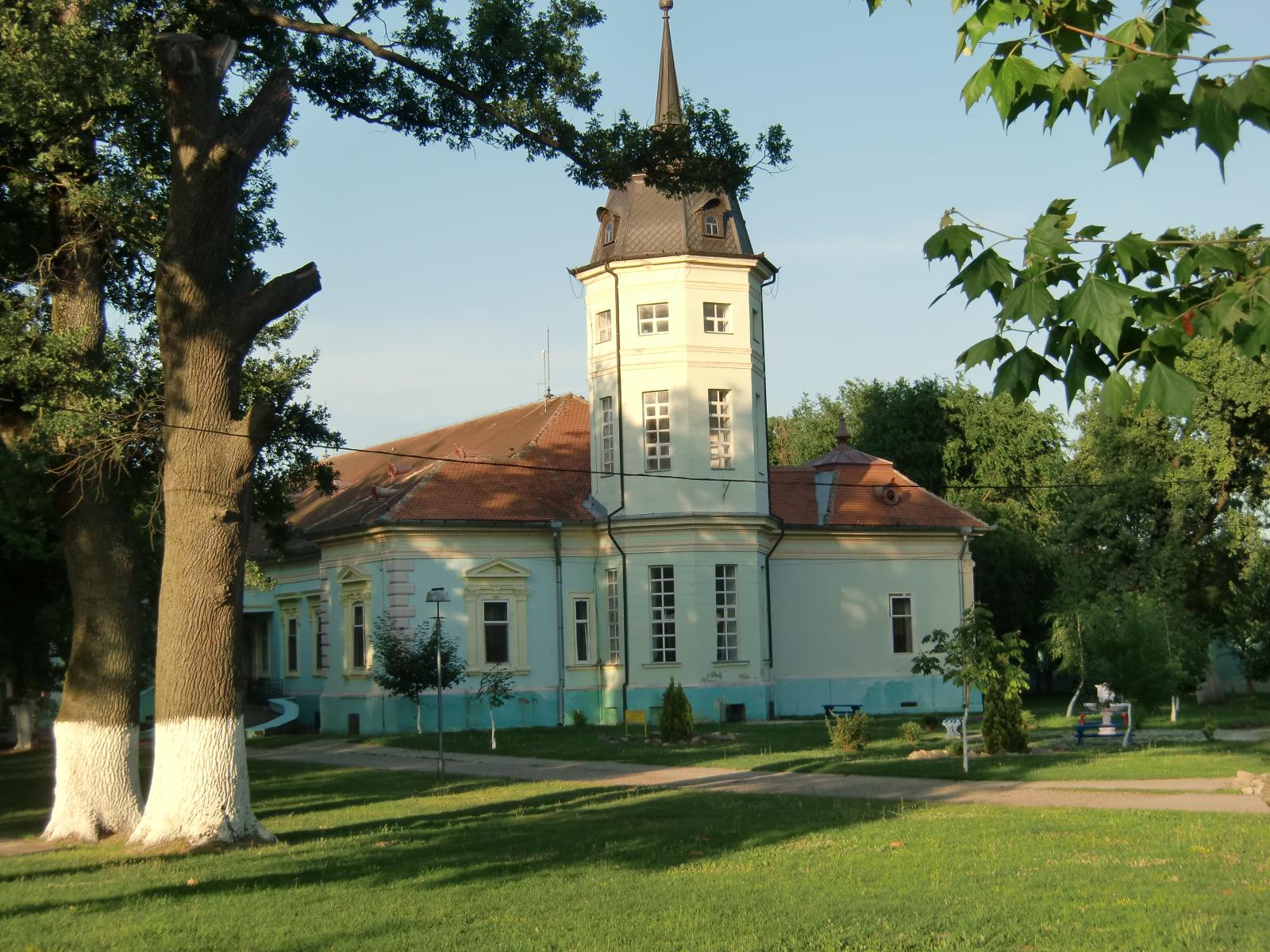
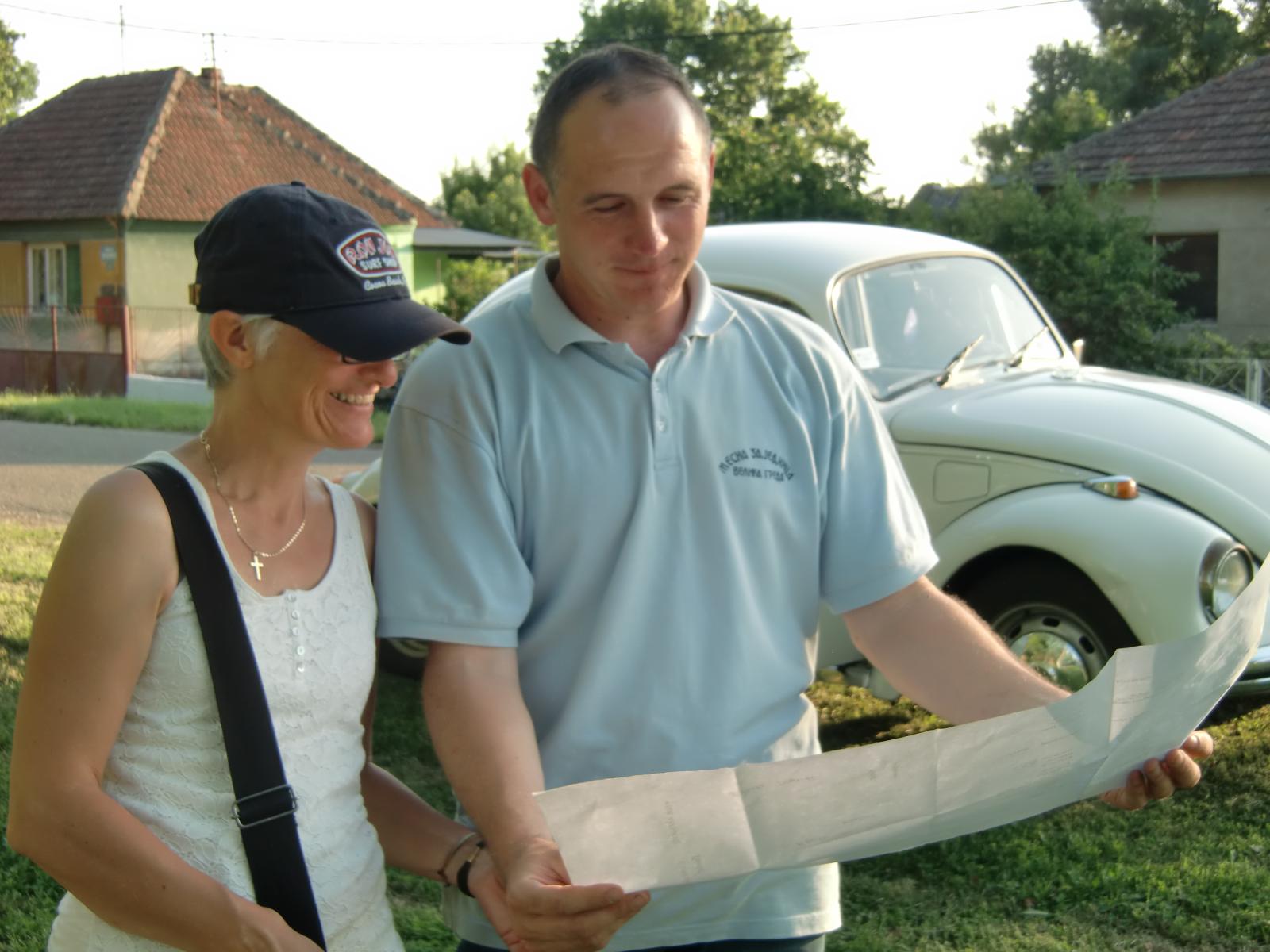
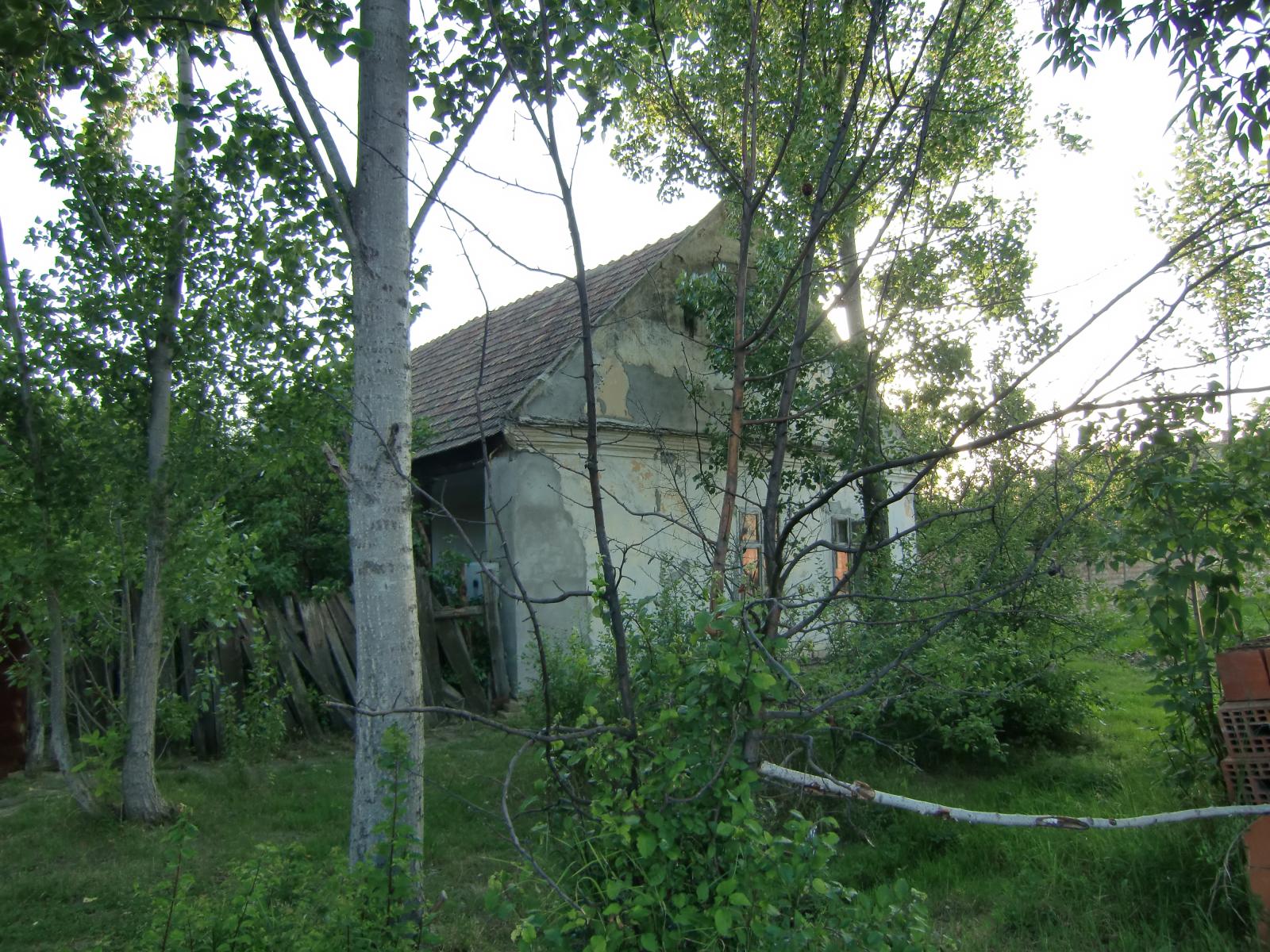
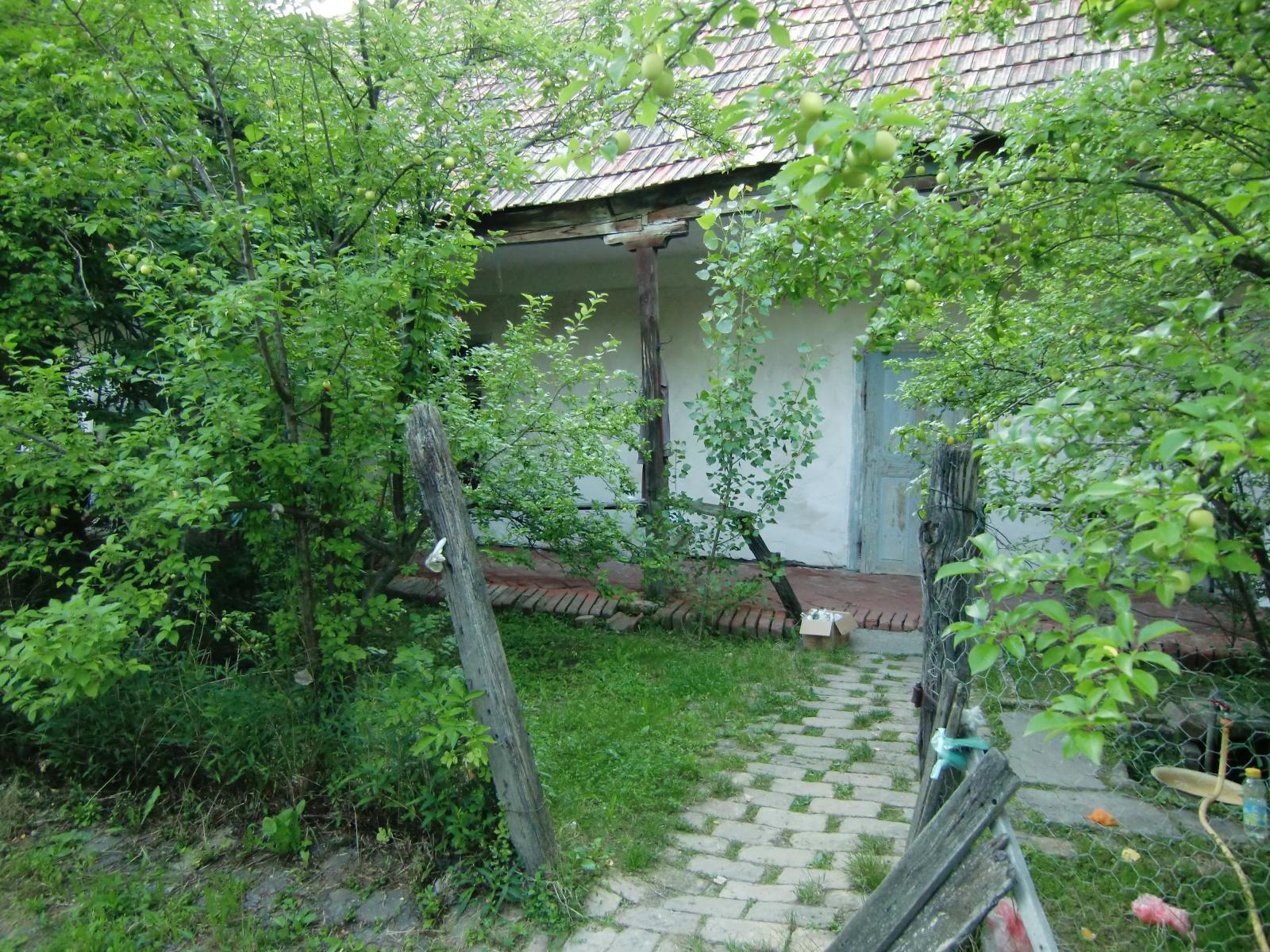
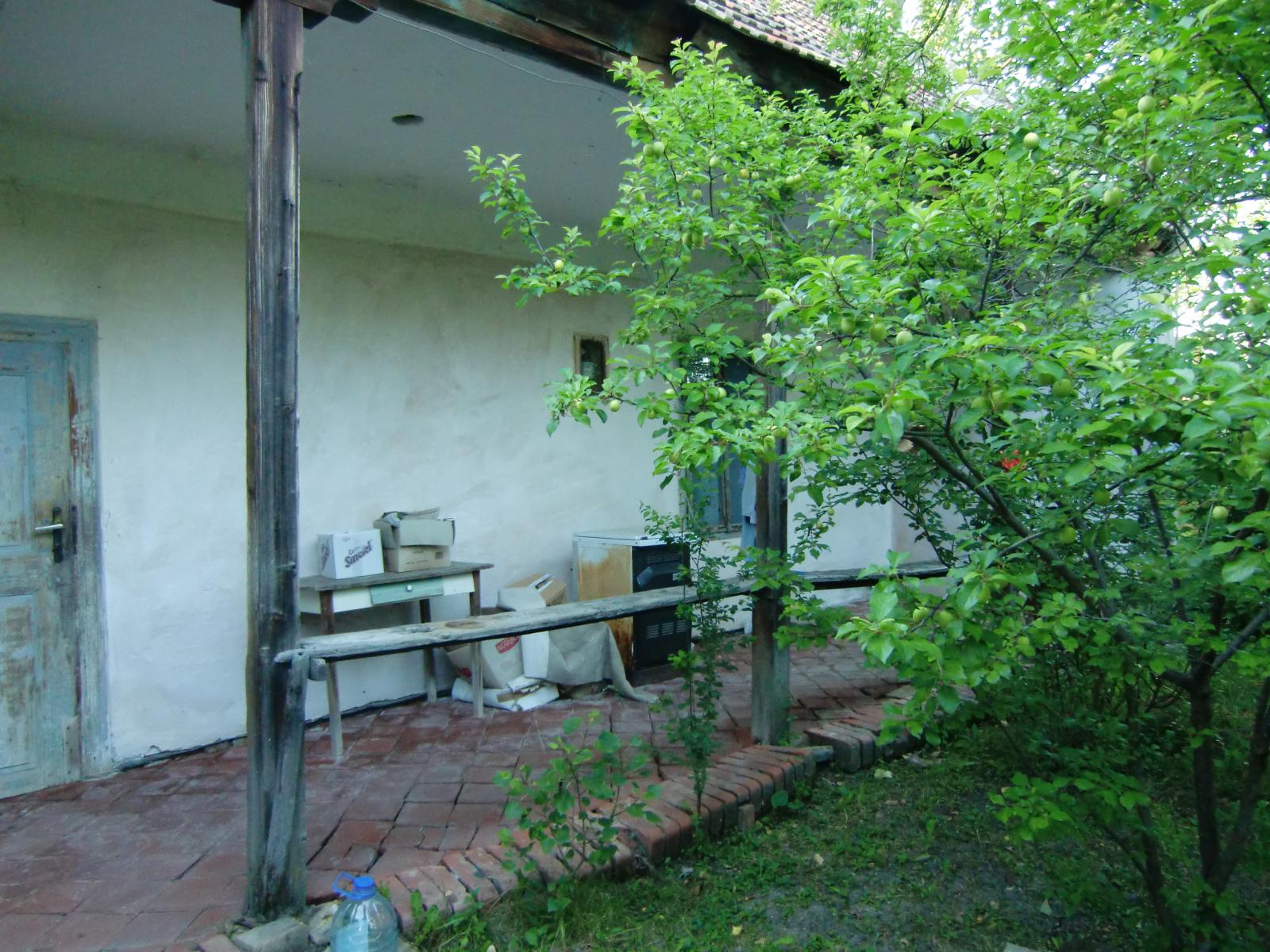
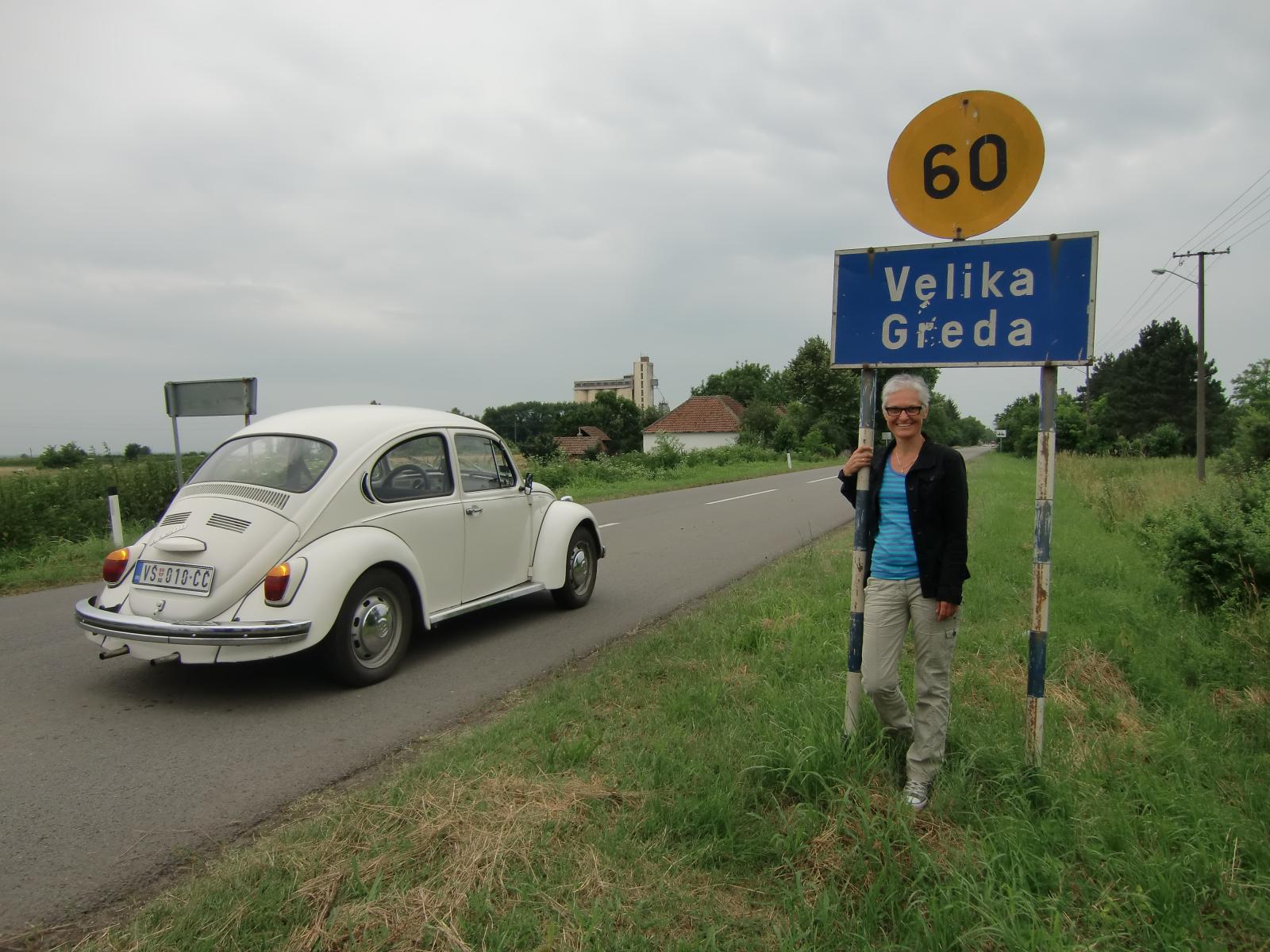
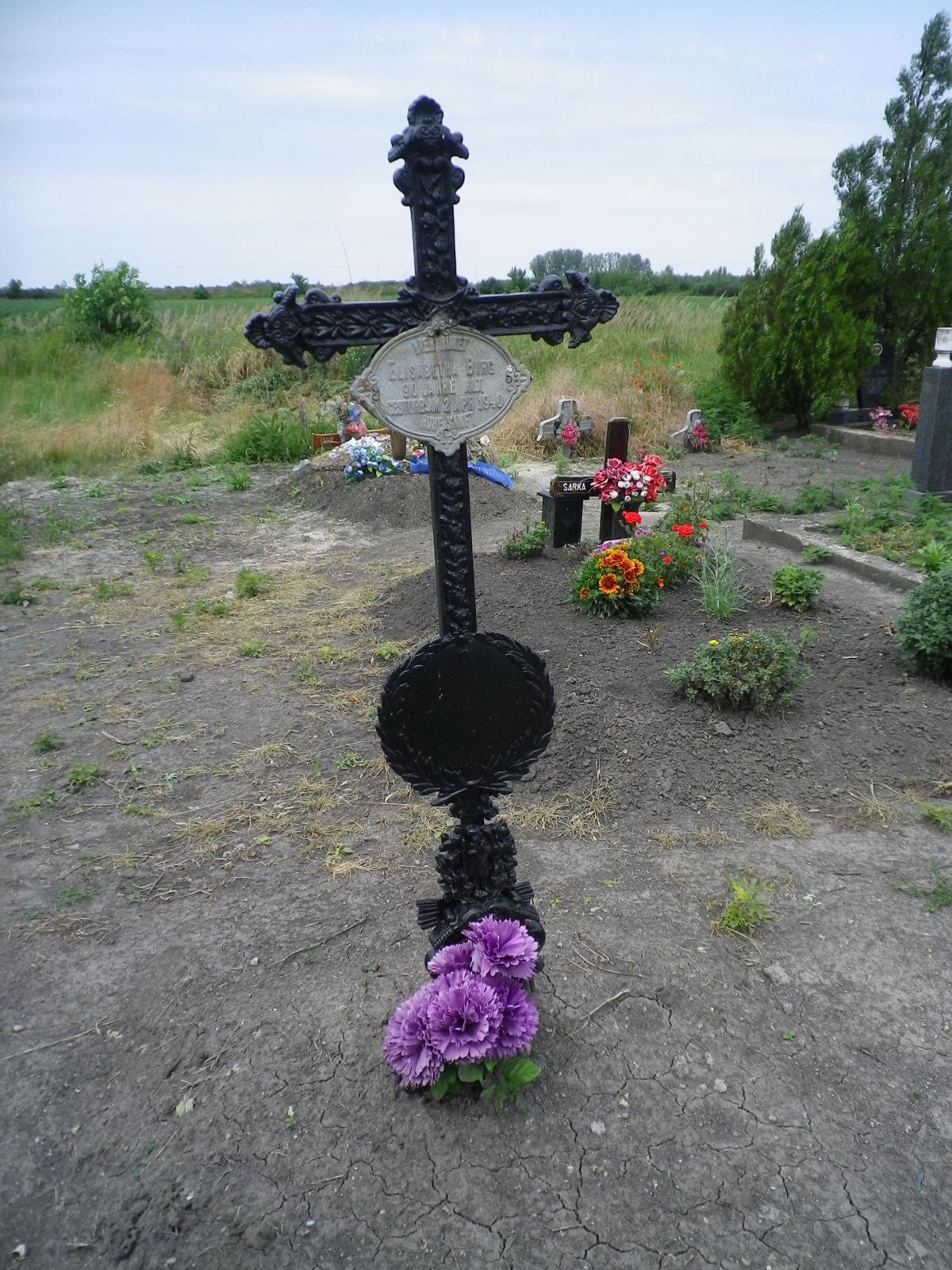
Via Stefansfeld and Setschanfeld, we arrived in Alt Lez, or Olez, as I heard it from my father. There we spent the night in a beautiful, newly renovated castle. Before dinner, Brane from Georgshausen (Velika Greda) drove up in his VW Beetle to greet us. Alt Lez is a very important place for me, as it is where my grandmother, Anna Fochler, came from. My great-grandparents are buried there in a crypt chapel in the cemetery. This chapel still exists, although in a somewhat desolate condition. Brane packed Staša and me into his Beetle and drove us through the village. Using the map of the village drawn by my uncle Martin Fochler, we tried to find the houses of the Fochler family. Brane showed me some places where Fochler houses used to stand, and we found my great-grandparents' house. It looks terrible, but I was overwhelmed.
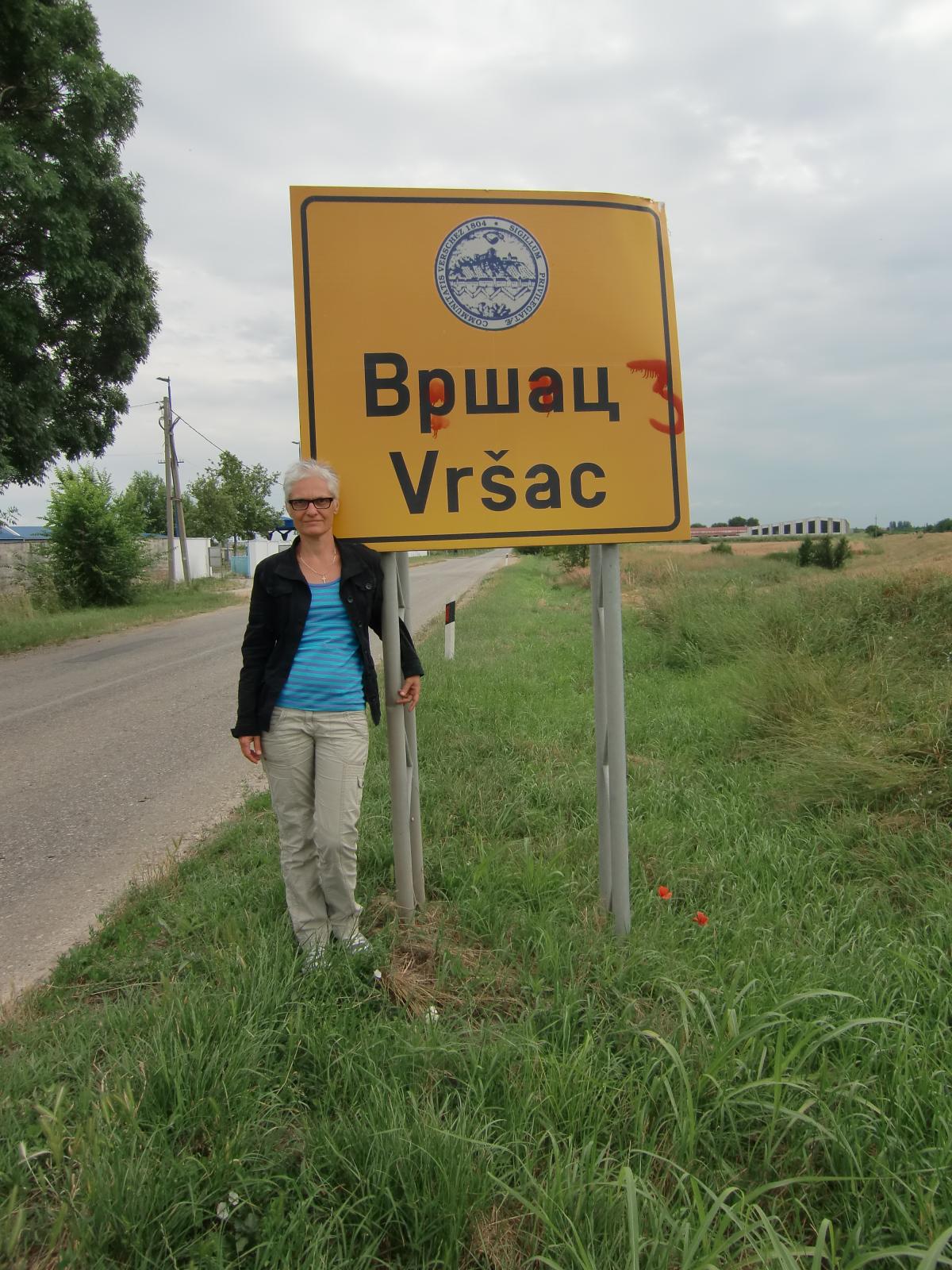
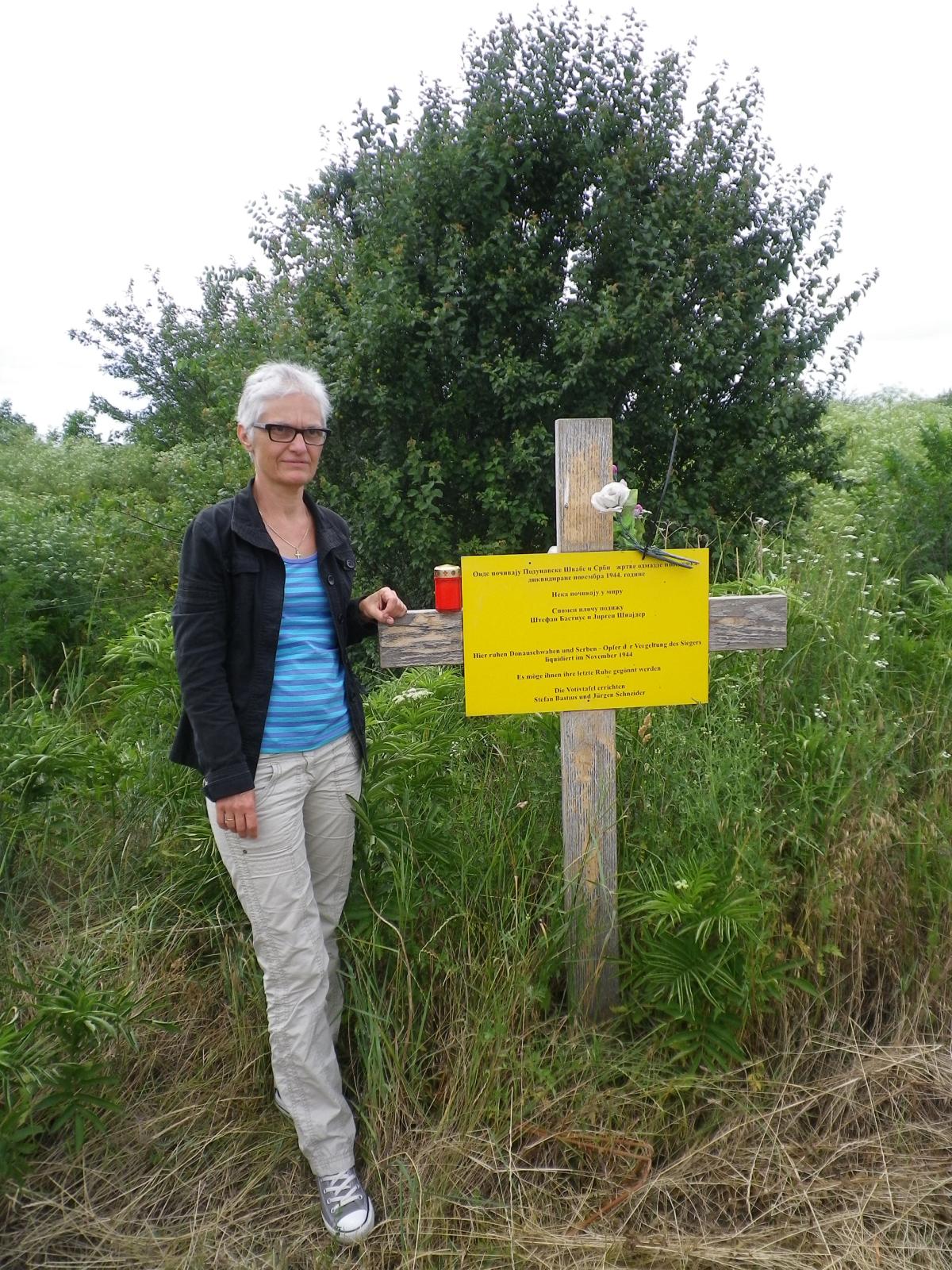
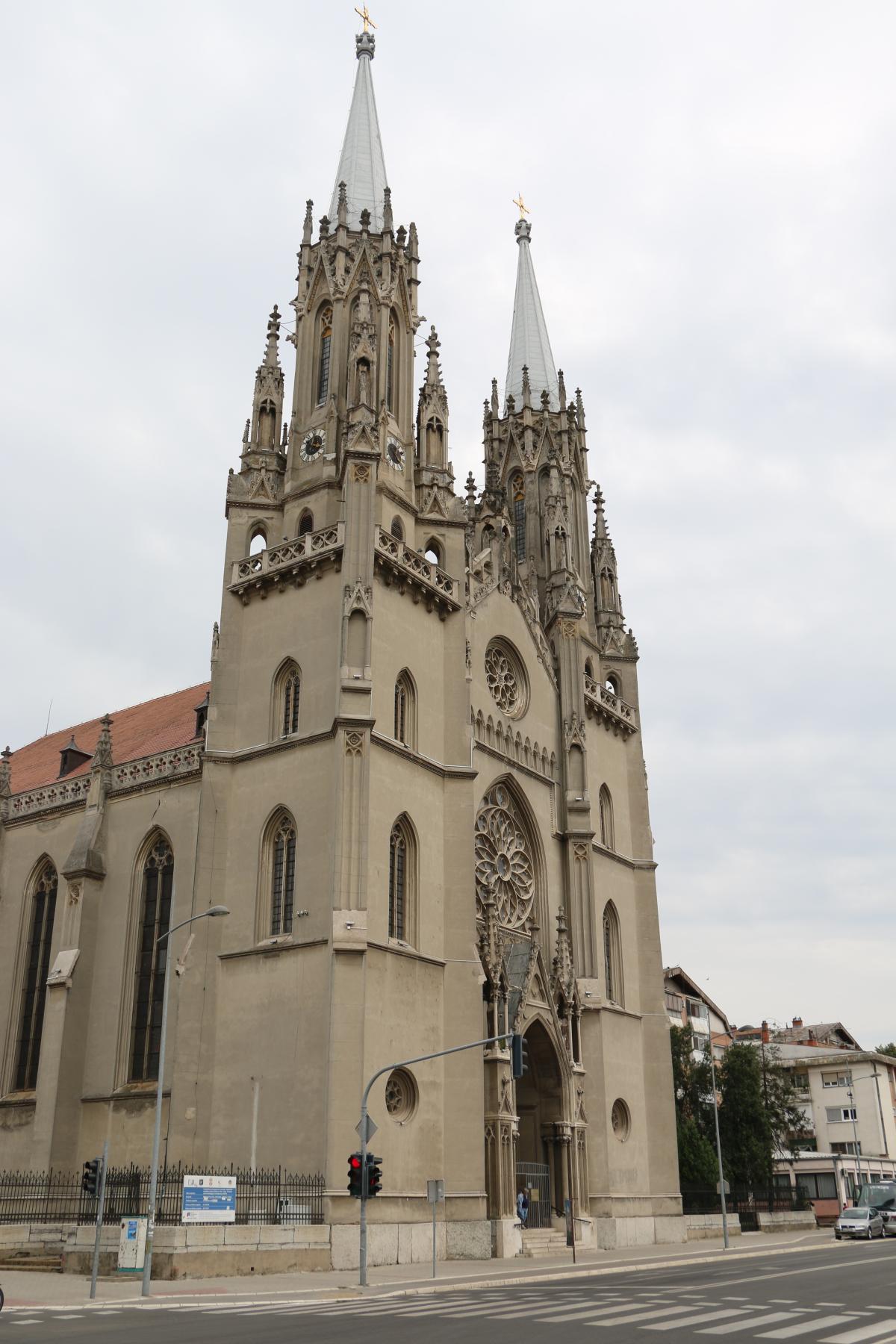
After a wonderful night in this beautiful castle, we drove via Karlsdorf to Belgrade the next day, where we visited the castle. Then we continued via Weißkirchen to Werschetz. I was getting closer and closer to my father's homeland! Staša had to find the mass grave on the Schinderwiese for me – and he found it. Of course, I lit a candle. My grandfather is buried here, along with four of my grandmother's brothers, alongside the many other victims of the war. We also visited the cathedral and took a stroll through the city. My father attended high school here for several years before he was able to flee with his school from the partisans.
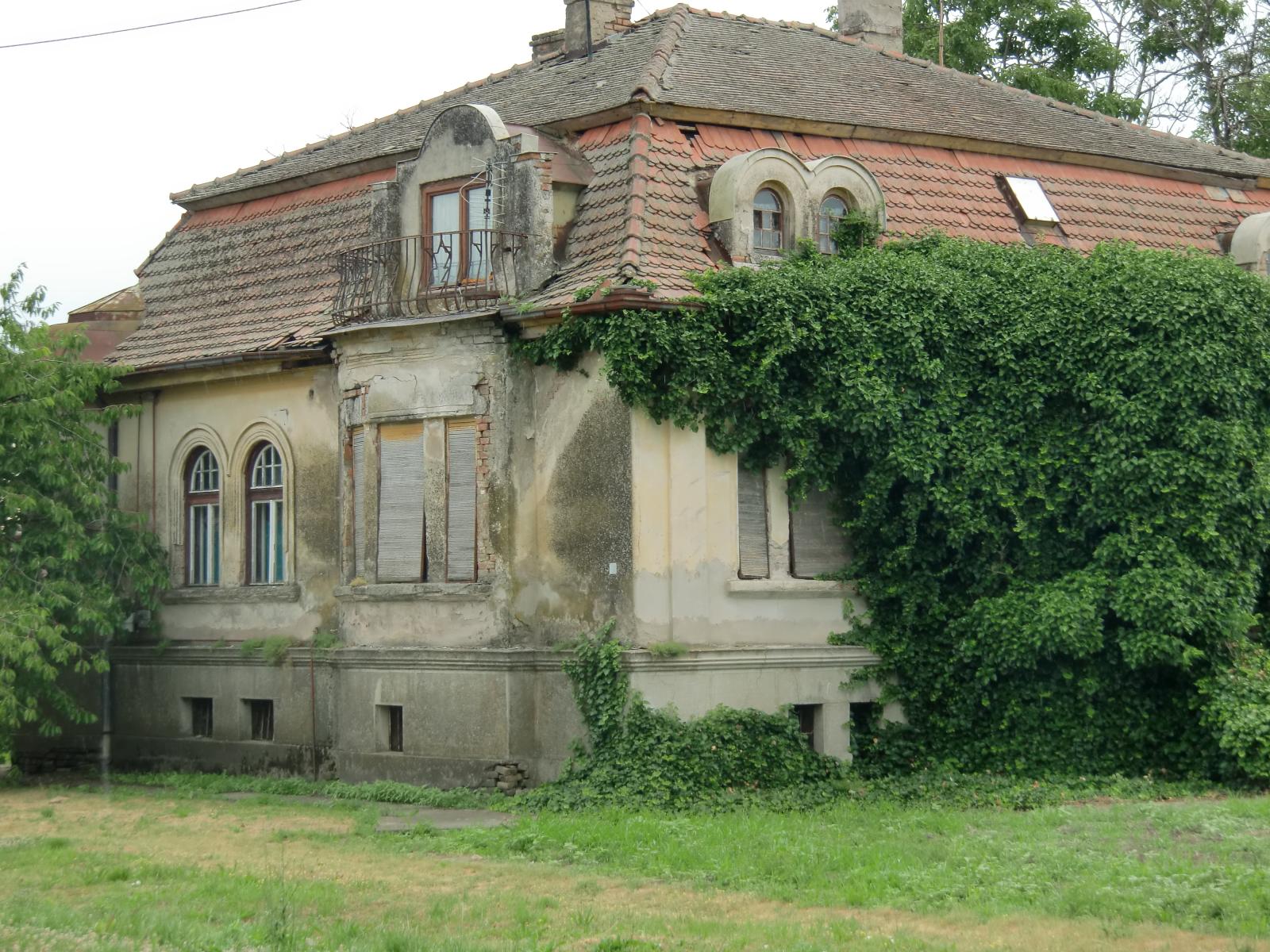
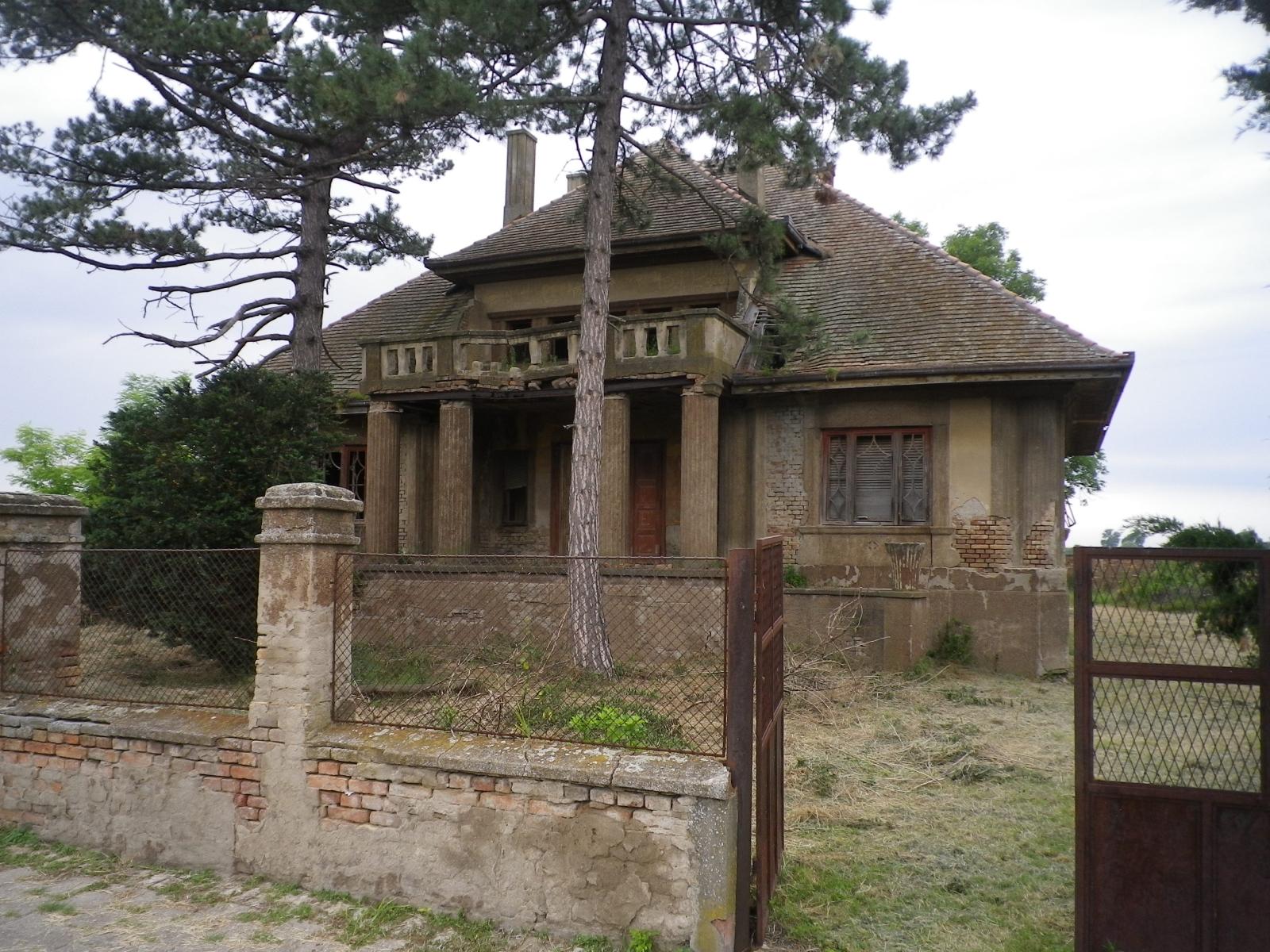
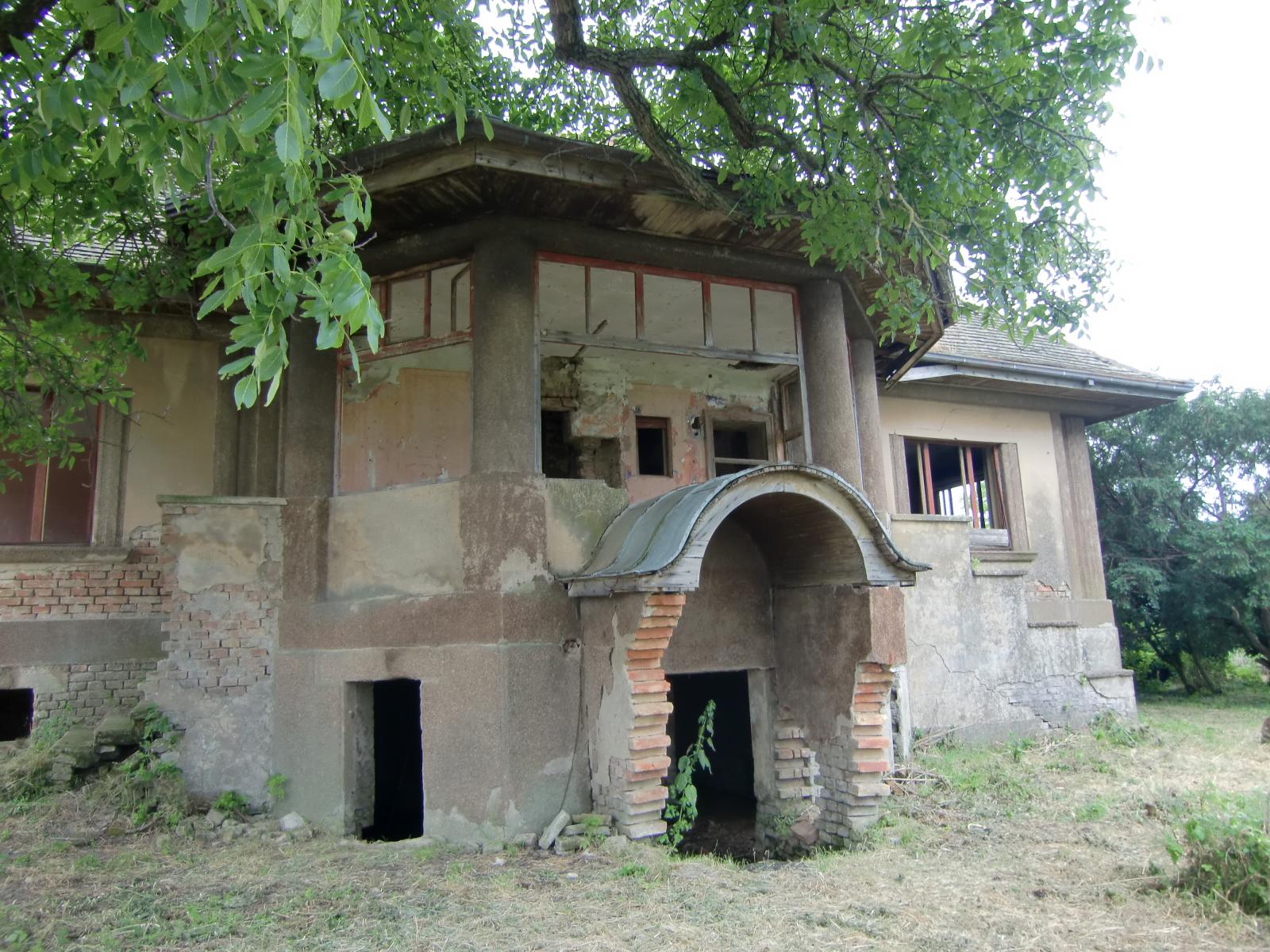
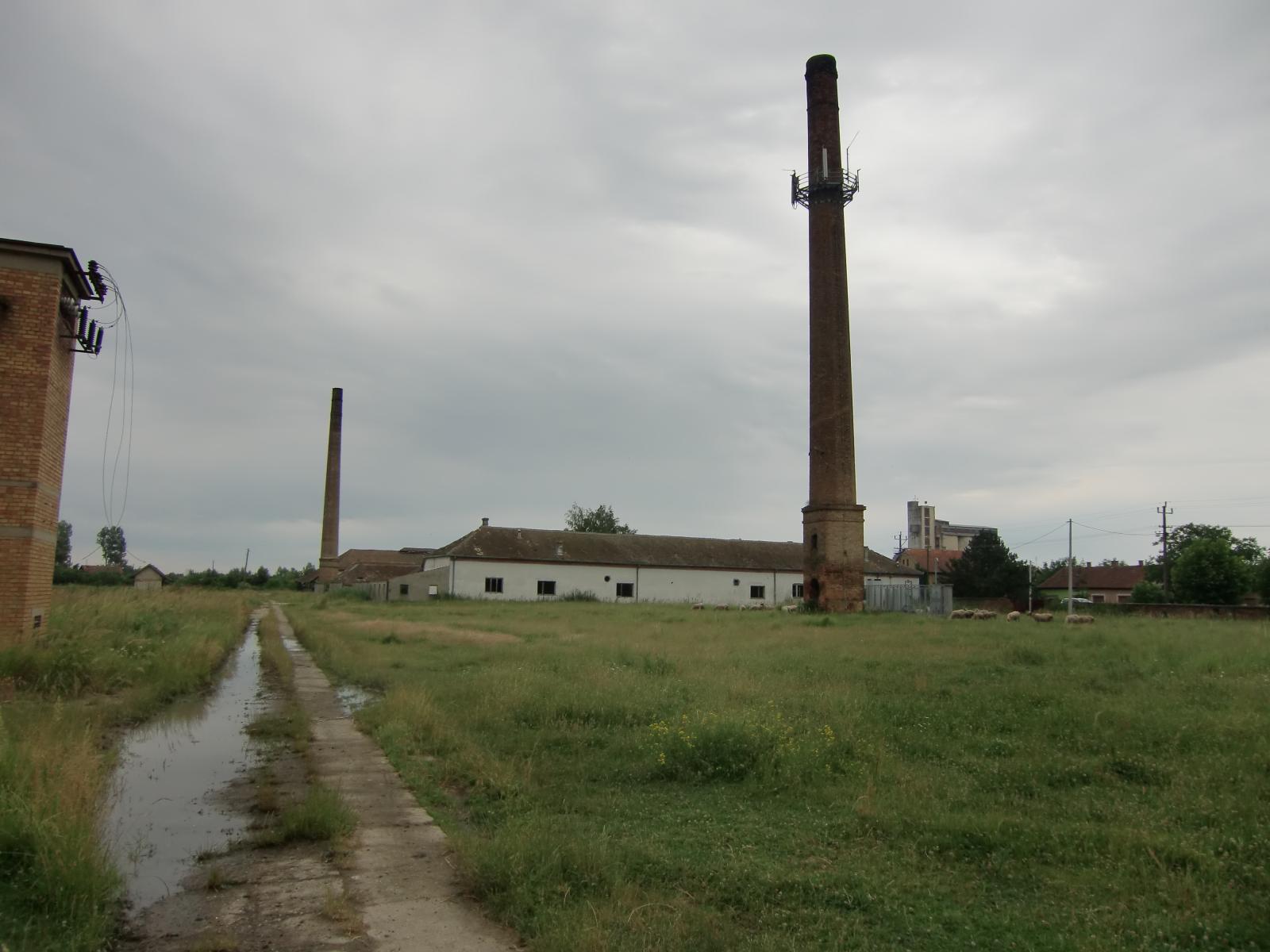
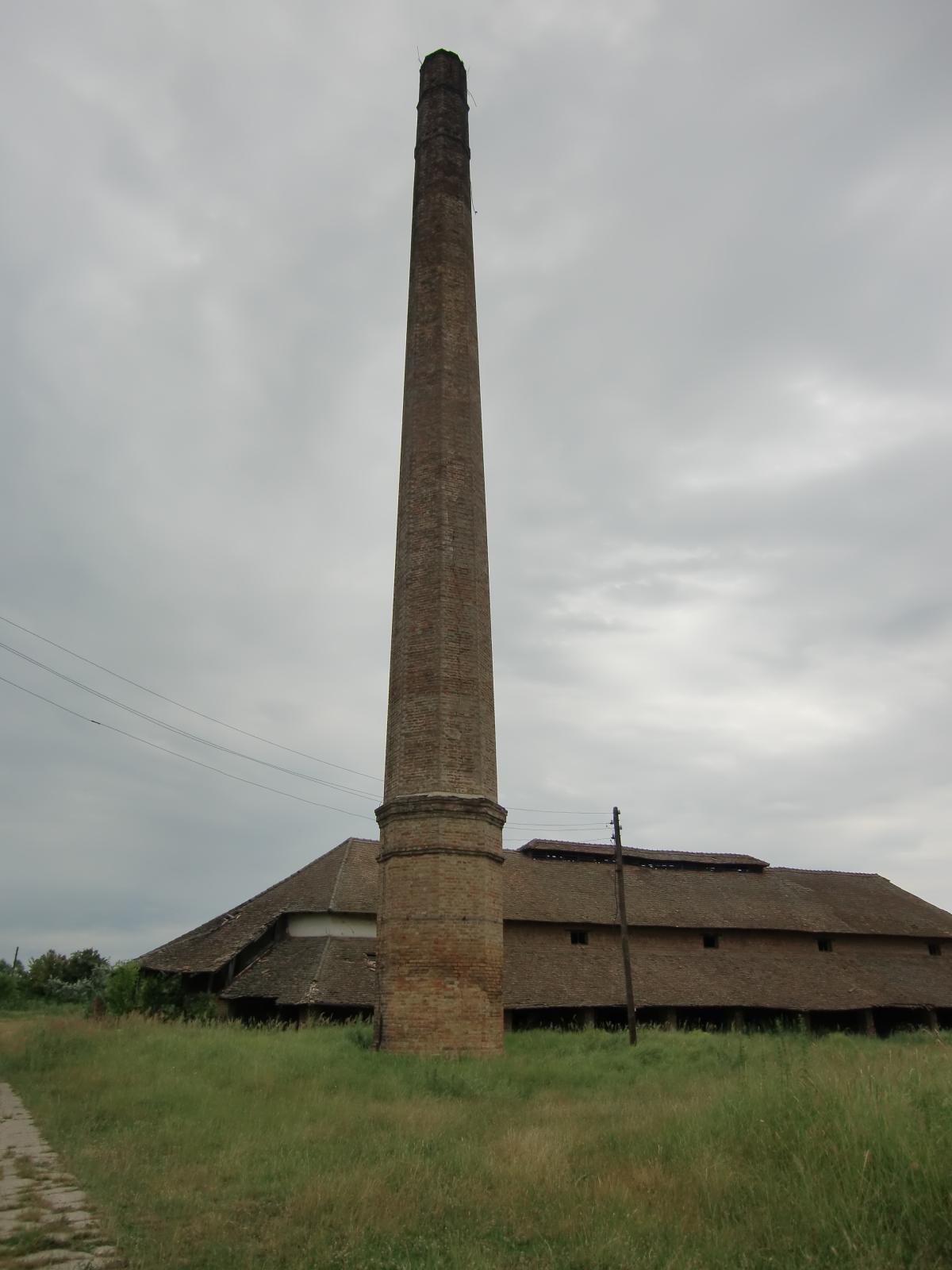
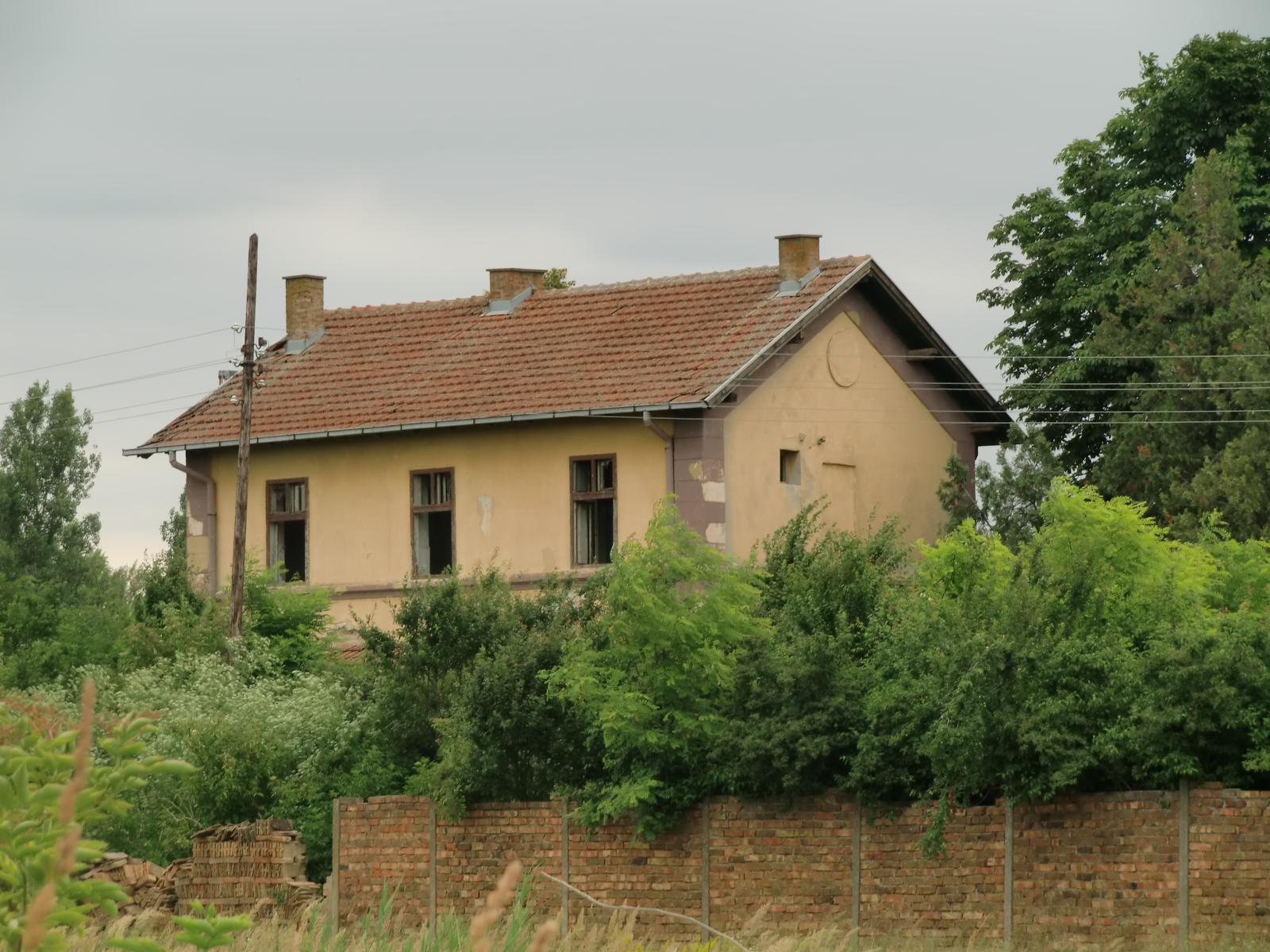
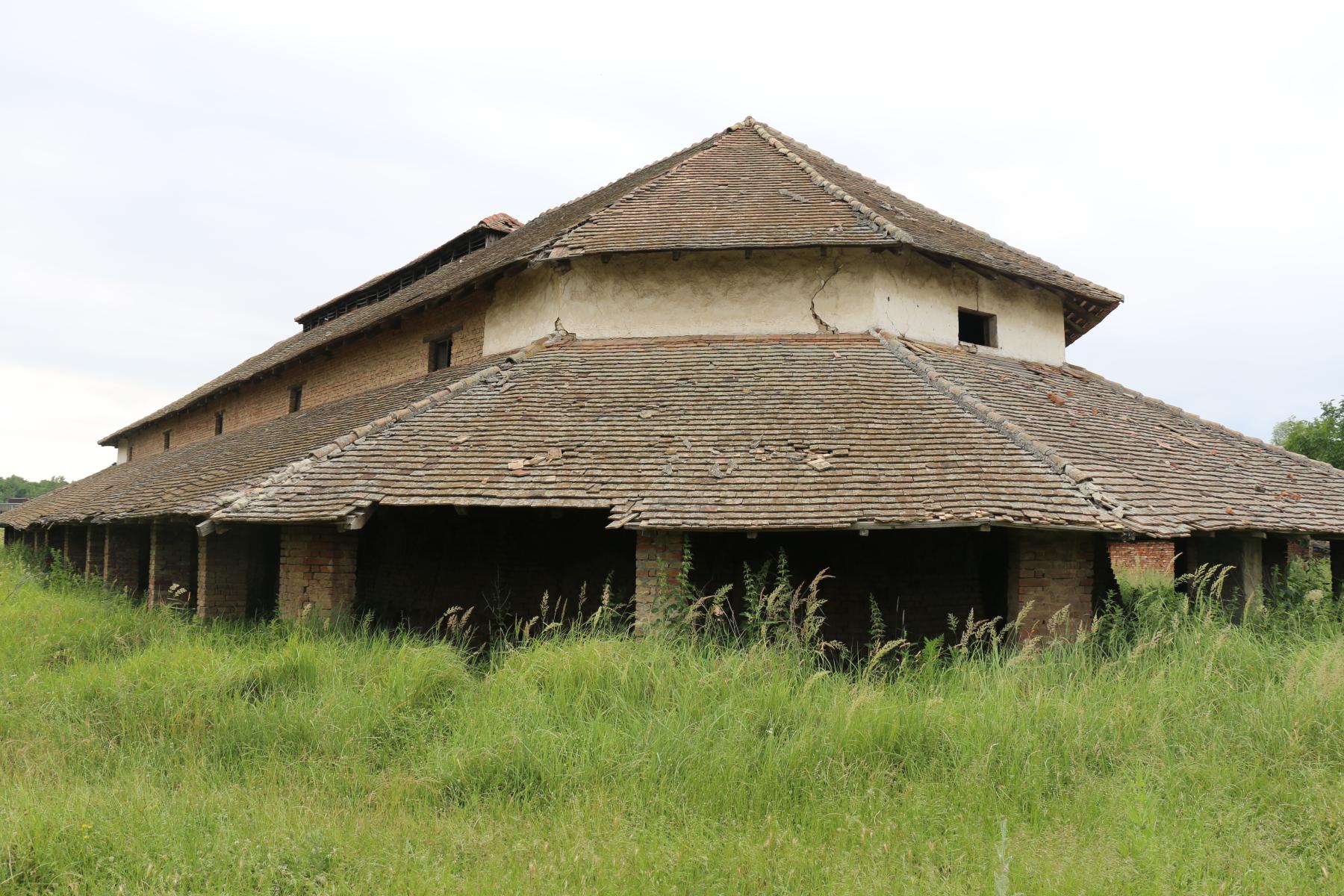
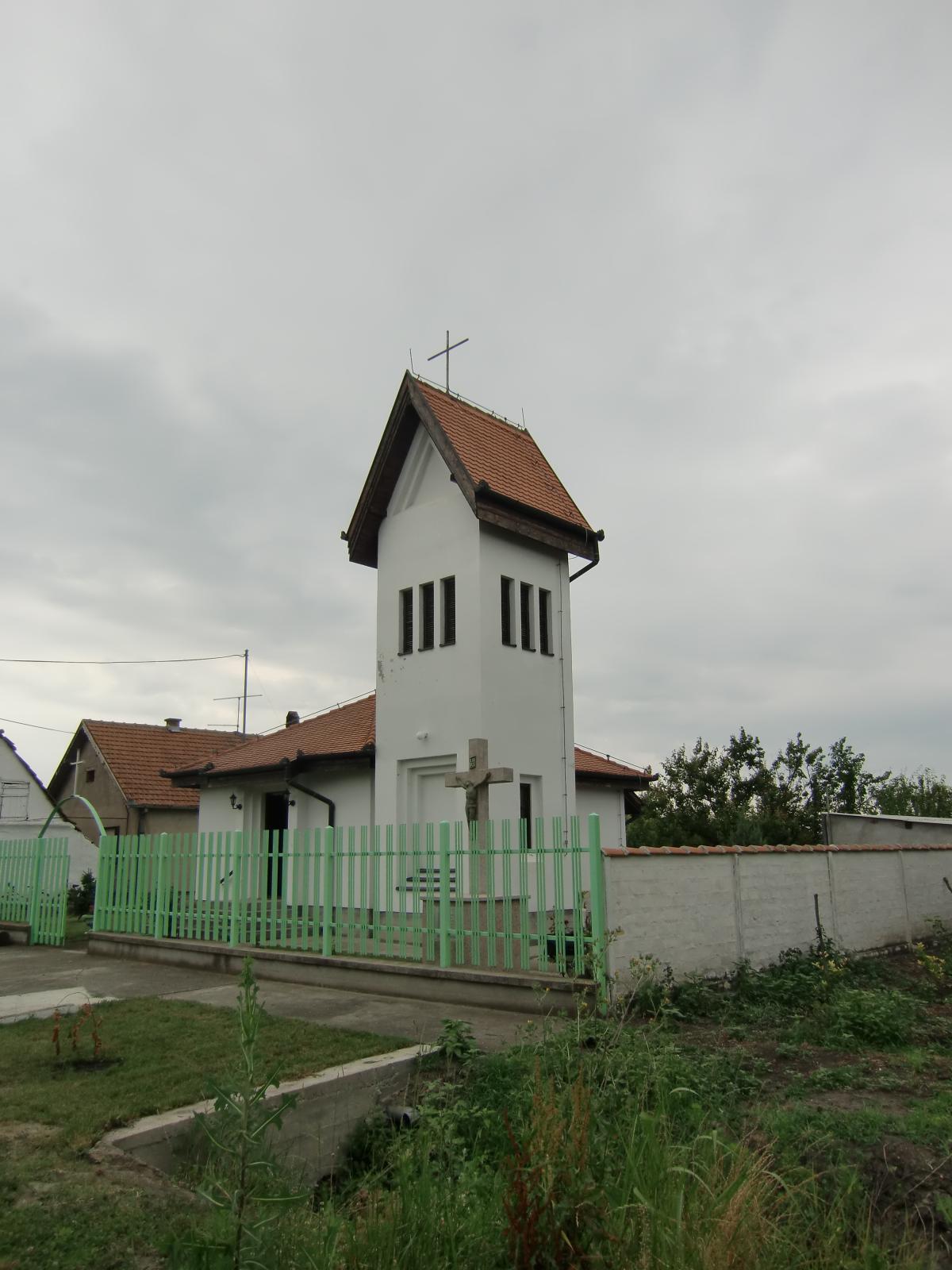
We stayed in Werschetz for three nights and took trips to the surrounding former villages every day. On the very first day, we came to Georgshausen. I had arrived. I saw all the places my father always talked about, the Birg Villa, the Faul Villa, the brick kilns with their large chimneys, the pond. Where my father's house once stood, there is now a small Catholic church—I was allowed inside and was able to light a candle. As I walked with my companions across the meadows behind the brick kilns toward the train station, I was so overwhelmed by my emotions that I unexpectedly burst into tears.
After visiting many other towns, where we mainly searched for cemeteries, we left Serbia on June 15 and drove to Timișoara in the Romanian Banat region. Here, too, we visited many former villages such as Josefsdorf, Sackelhauses, and Lenauheim.
On June 18, we left the Banat region and drove back to Vienna via Budapest. Before my traveling companions went to their hotel, they brought me safely back home. To say goodbye, I invited everyone to a glass of wine at a wine tavern.
It was a very beautiful, interesting trip with many impressions and emotional moments. I will be eternally grateful to Glenn Schwartz for taking me on this tour.